
Hunza vs Skardu: Which Northern Paradise Should You Visit First?
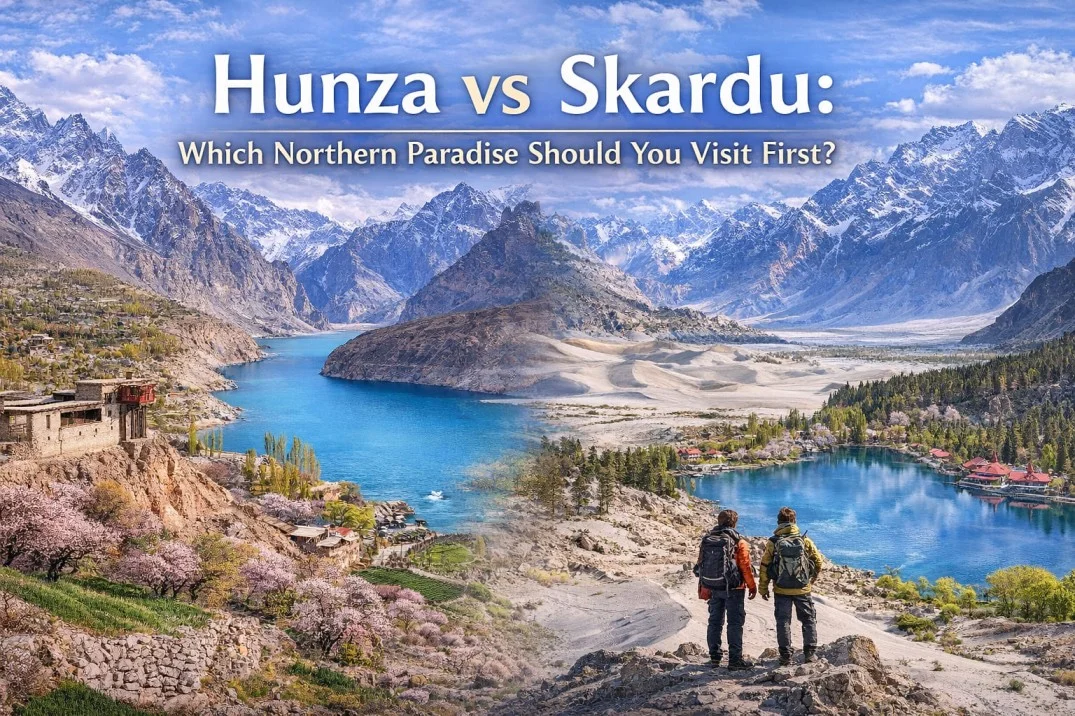
If you're dreaming about Pakistan's north, you've probably heard about Hunza and Skardu. Both places are absolutely stunning, but they offer very different experiences. Let me help you figure out which one might be your perfect mountain escape.
What Makes These Places Special?
Think of Hunza as that picture-perfect valley you've seen in travel magazines — green terraces climbing up mountainsides, ancient forts perched on rocky outcrops, and those impossibly blue lakes that don't even look real. It's beautiful in a gentle, almost fairy-tale kind of way.
Skardu? That's where things get wild. Imagine vast open plains at ridiculous altitudes, lakes so pristine they mirror the sky, sand dunes sitting right under snow-capped peaks (yes, really!), and landscapes that make you feel like you've landed on another planet. It's raw, dramatic, and honestly, unforgettable.
Getting There — Skardu Takes the Lead
Here's where Skardu really shines. Skardu International Airport now connects you directly to major cities, which is a game-changer. You can fly from Islamabad, Karachi, or Lahore and land right in the heart of Baltistan. Sure, flights depend on weather (mountains, you know), but when they're running, you save yourself hours of road travel.
Of course, if you're up for an adventure, the road from Gilgit to Skardu is spectacular — though it can get a bit bumpy after heavy rains.
Hunza is reachable by the famous Karakoram Highway from Islamabad. The drive is gorgeous but long, winding through gorges and mountain passes for hours.
Winner for accessibility? Skardu, hands down.
When Should You Go?
For Hunza, spring (April to May) brings cherry blossoms and apricot flowers — the valley looks like it's been painted. Autumn (September to October) turns everything golden. Summer works too if you don't mind some crowds.
Skardu is best visited in summer (June to September) when the weather's warm enough to explore comfortably and all the roads are open. Winter is brutally cold and cuts off access to many areas — unless you're into extreme cold, save Skardu for warmer months.
The Landscapes — Skardu's Diversity Wins
Don't get me wrong, Hunza is gorgeous. Attabad Lake with its surreal turquoise water, the pointy Passu Cones, views of Rakaposhi towering over everything — it's all beautiful and very Instagram-worthy. The valleys are lush, green, and easy on the eyes.
But Skardu? Skardu is on another level entirely.
Deosai National Park — they call it the Land of Giants for a reason. It's one of the highest plateaus on Earth, covered in wildflowers in summer, and home to Himalayan brown bears. Camping up there under a sky full of stars is something you'll never forget.
Shangrila Lake (Lower Kachura) looks like someone photoshopped it into existence. The reflection of the mountains in that water is almost too perfect.
Katpana Cold Desert — sand dunes with snowy mountains behind them. How often do you see that combination? It's bizarre and beautiful at the same time.
Satpara Lake, Upper Kachura Lake, Manthokha Waterfall — each spot is more stunning than the last. The variety is incredible. One day you're at a serene lake, the next you're crossing a high-altitude desert, then you're standing at a roaring waterfall.
If you want sheer diversity of landscapes packed into one region, Skardu absolutely delivers.
History Buffs, Both Places Deliver
Hunza has Baltit Fort and Altit Fort — both beautifully restored and full of history about the old Hunza kingdom. Walking through those ancient halls is pretty cool.
Skardu matches this with Shigar Fort (now a heritage hotel where you can actually stay!), and Skardu Fort (also called Kharpocho Fort), which gives you sweeping views over the valley. The history here runs deep, with influences from Tibet and Central Asia woven into the local Balti culture.
Both regions have fascinating stories to tell. You won't be disappointed either way.
The People — Skardu's Warmth Stands Out
Hunza folks are famously friendly and welcoming — it's part of what makes visiting so pleasant.
But here's something special about Skardu: the people there have this incredible warmth that hits differently. Maybe it's because the region is still less crowded with tourists, or maybe it's just the Balti way, but locals in Skardu go out of their way to make you feel at home. They're proud of their land and genuinely happy to share it with visitors. You'll find yourself invited for tea, getting local tips you won't find in any guidebook, and leaving with friendships you didn't expect to make.
What Can You Actually Do?
In Hunza, you're looking at:
- Drives along the Karakoram Highway with plenty of photo stops
- Walks around Attabad Lake
- Exploring historic forts
- Day trips to Khunjerab Pass (the highest border crossing in the world)
- Strolling through villages and markets
It's perfect if you want a relaxed trip with culture and scenery.
In Skardu, you can:
- Camp under the stars in Deosai
- Go boating on crystal-clear mountain lakes
- Take jeep safaris across the cold desert
- Trek to remote valleys like Shigar and Khaplu
- Explore waterfalls and hidden spots most tourists never see
Skardu is basically an adventure playground. If you love getting out there and exploring, you'll be in heaven.
Food — Taste the Mountains
Hunza's food is fresh and simple — lots of organic fruits (those apricots!), homemade breads, and hearty mountain meals.
Skardu's cuisine reflects Balti traditions with rich, warming dishes perfect after a long day outdoors. You'll find local apricot treats here too, along with flavorful spiced dishes that'll warm you from the inside out.
So... Which One?
Look, I won't lie to you — both are incredible. But if I had to pick?
Go to Skardu if:
- You want easier access via the international airport
- You're after dramatic, diverse landscapes (lakes, deserts, plateaus, waterfalls — the works)
- Adventure and exploration excite you more than taking it easy
- You want to experience genuine local hospitality in a place that still feels authentic
- You want to see landscapes that genuinely feel otherworldly
Choose Hunza if:
- You prefer a gentler, more relaxed pace
- You're traveling with family or elderly relatives
- You're really into forts and cultural heritage sites
- You want that classic "green valley" mountain experience
My Honest Take
Skardu just offers more — more variety in landscapes, more adventure opportunities, better accessibility with the airport, and that special something in the way locals welcome you. The sheer scale and drama of the place stays with you long after you've left.
That said, plenty of travelers do both regions in one trip, and honestly? That's the dream. But if you're choosing just one for your first northern Pakistan adventure, Skardu gives you more bang for your buck.
Pack smart, bring good shoes, charge your camera, and get ready for an adventure you'll be talking about for years. Trust me — the north will get under your skin in the best possible way.
FAQs for Hunza vs Skardu Guide
Planning & Accessibility
Q: Which is easier to reach — Hunza or Skardu?
Skardu is now easier to reach thanks to Skardu International Airport, with direct flights from Islamabad, Karachi, and Lahore (weather permitting). Hunza requires a long scenic drive along the Karakoram Highway from Islamabad, which takes around 18-20 hours. If you prefer flying and saving time, Skardu wins.
Q: How many days do I need for Hunza and Skardu?
For Hunza, 3-4 days is enough to cover major attractions like Attabad Lake, Baltit Fort, and Karimabad. For Skardu, plan at least 5-7 days to properly explore Deosai, the lakes, cold desert, and nearby valleys like Shigar and Khaplu. If visiting both, allocate 10-12 days minimum.
Q: Can I visit both Hunza and Skardu in one trip?
Absolutely! Many travelers combine both. You can fly into Skardu, explore the region, then drive to Hunza via Gilgit. Alternatively, drive up the Karakoram Highway to Hunza first, then head to Skardu. Just make sure you have enough time — rushing through either place would be a shame.
Q: What's the distance between Hunza and Skardu?
The road distance is approximately 350-400 km via Gilgit, taking around 8-10 hours depending on road conditions. There's no direct route — you'll need to go through Gilgit city.
Best Time to Visit
Q: When is the best time to visit Skardu?
June to September is ideal. The weather is warm, all roads are accessible, and you can visit Deosai National Park (which is closed in winter). July and August are peak months with the best weather for camping and trekking.
Q: When should I visit Hunza?
Spring (April-May) for cherry and apricot blossoms, or autumn (September-October) for golden foliage. Summer (June-August) is also great but can be busier with tourists. Winter is cold but offers snow-covered landscapes if you don't mind freezing temperatures.
Q: Can I visit Deosai National Park year-round?
No, Deosai is only accessible from late May/June to September due to heavy snowfall. The rest of the year, it's completely closed off by snow.
Cost & Budget
Q: Which is more expensive — Hunza or Skardu?
Costs are fairly similar for both regions. However, flights to Skardu can be pricier than road travel to Hunza. Accommodation, food, and activities are comparably priced. Budget around PKR 5,000-8,000 per day per person for mid-range travel in either destination.
Q: How much does a flight to Skardu cost?
Flights from Islamabad to Skardu typically range from PKR 15,000 to 30,000 one way, depending on the season and airline (PIA or Airblue). Book early for better rates, and always have a backup plan as flights can be cancelled due to weather.
Activities & Attractions
Q: Which destination is better for adventure activities?
Skardu takes the lead for adventure. You get camping in Deosai, jeep safaris in the cold desert, boating on alpine lakes, and trekking to remote valleys. Hunza is more relaxed with scenic drives, fort visits, and leisurely lake walks — perfect if you want beauty without the extreme adventure.
Q: Is Skardu suitable for families with kids?
Yes! While Skardu is known for adventure, there are plenty of family-friendly activities like boating on Satpara Lake, picnics at Shangrila, and easy walks around Skardu city. Just avoid very high-altitude treks with young children.
Q: What are the must-visit places in Skardu?
Don't miss Deosai National Park, Shangrila Lake (Lower Kachura), Satpara Lake, Katpana Cold Desert, Shigar Fort, Skardu Fort, and Manthokha Waterfall. If you have extra time, explore Khaplu Valley.
Q: What are the must-see spots in Hunza?
Attabad Lake, Baltit Fort, Altit Fort, Passu Cones, Hussaini Suspension Bridge, Karimabad viewpoint, and Khunjerab Pass (highest border crossing with China).
Practical Information
Q: Is it safe to travel to Hunza and Skardu?
Yes, both regions are very safe for tourists. The local people are incredibly welcoming and hospitable. Just follow basic travel safety — don't travel alone at night on mountain roads, hire registered guides for treks, and respect local customs.
Q: What should I pack for a trip to Skardu?
Pack layers! Even in summer, temperatures can drop significantly at night. Bring warm jackets, comfortable hiking shoes, sunscreen, sunglasses, a good camera, power banks, and any medications you need (pharmacies are limited). Don't forget cash — ATMs are scarce.
Q: Are there ATMs in Skardu and Hunza?
Limited. Skardu and Gilgit have a few ATMs, but they often run out of cash or have connectivity issues. Carry enough cash from major cities. Hunza also has limited ATM access in Karimabad.
Q: Do I need a permit to visit these areas?
Pakistani citizens don't need permits. Foreign tourists need to register with local authorities in some areas. If you're visiting Khunjerab Pass, there may be additional documentation required. Check current requirements before traveling.
Food & Culture
Q: What's the local food like in Skardu?
Balti cuisine is hearty and flavorful — think warm stews, local breads, and apricot-based dishes. You'll find traditional items like "chap shuro" (Balti bread with meat), apricot oil, dried fruits, and warming teas. The food reflects the region's Tibetan and Central Asian influences.
Q: Are there vegetarian food options?
Yes, though meat dishes are common. You can find vegetarian options like lentils (dal), vegetables, rice, bread, and plenty of fresh fruits. Just communicate your dietary preferences to your hosts or restaurants.
Q: What language do people speak in Skardu and Hunza?
In Skardu, the local language is Balti, though many people speak Urdu. In Hunza, Burushaski is the main local language along with Wakhi in upper areas. Urdu is widely understood in both regions, and you'll find English speakers in tourist areas and hotels.
See Hotel Himalaya Luxury Rooms